


Date:2026-08-24 11:24:08 Visits:6
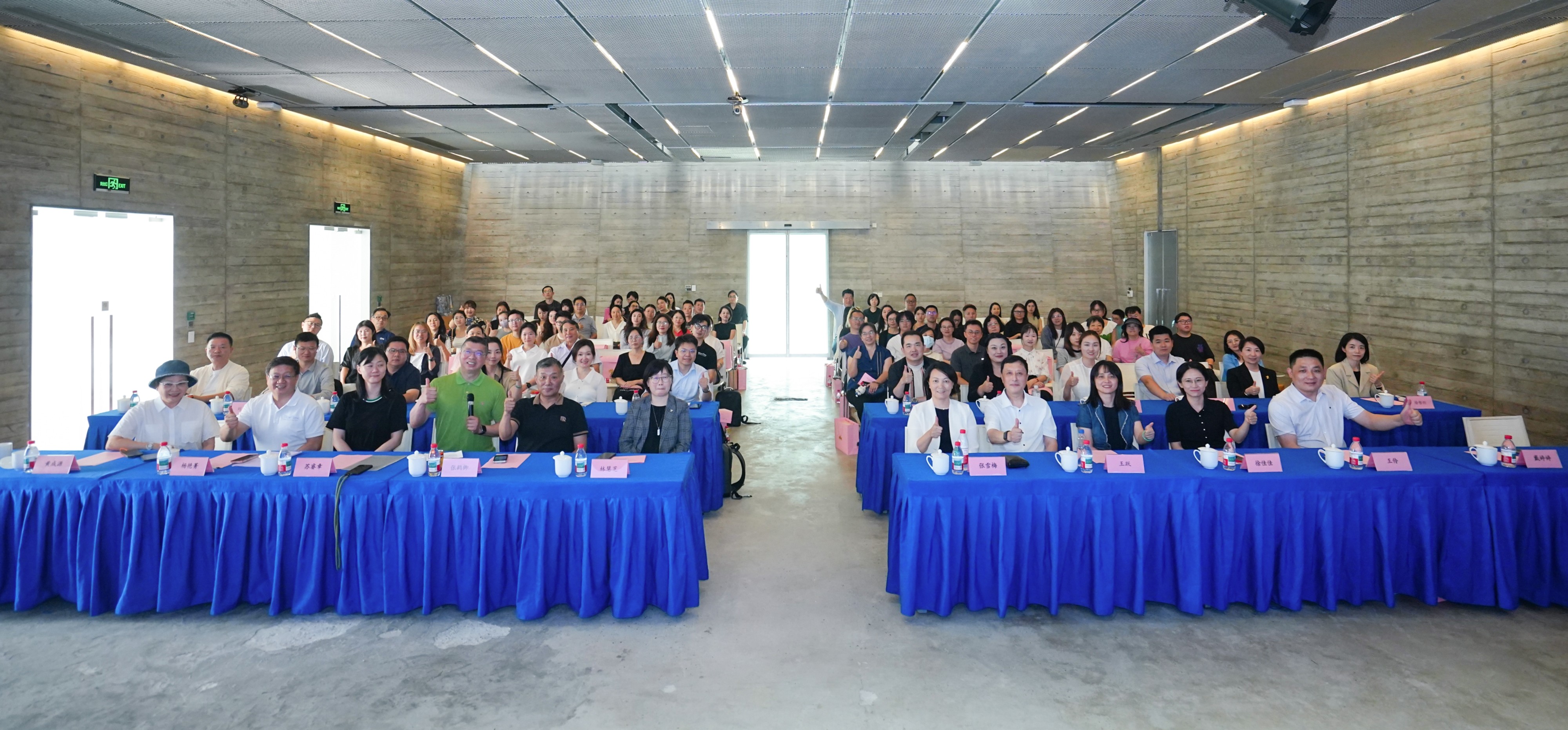
On the afternoon of July 10, the themed lecture series "Enabling People with Intelligence · Unlocking New Opportunities with Data" for Taiwan‑invested Enterprises was successfully held in Shanghai's Xuhui District. Guided by the Xuhui District Taiwan Affairs Office, the event was co‑hosted by the Xuhui District Working Committee of the Shanghai Association of Taiwan‑Invested Enterprises, its Finance, Cultural‑Creative and Healthcare Industry Working Committees, and Shanghai Zhongxuhui Economic Development Co., Ltd.
Leaders and distinguished guests in attendance included Wang Yue, Resident Vice President of the Shanghai Association of Taiwan‑Invested Enterprises; Zhang Xuemei, Director of the Xuhui District Taiwan Affairs Office; Wang Ling, Deputy Director of the Xuhui District Business Environment Service Center; and Dai Tingting, Deputy General Manager of Shanghai Xuhui City Development (Group) Co., Ltd. and General Manager of Shanghai Zhongxuhui Economic Development Co., Ltd. Numerous entrepreneurs from Taiwan‑invested enterprises and corporate human resources leaders gathered for in‑depth discussions covering four key themes: industry opportunities, workforce risk control, legal practice, and intelligent transformation.
As a member enterprise of the Xuhui District Working Committee of the Shanghai Association of Taiwan‑Invested Enterprises, Shanghai Maxflex Medical Technology Co., Ltd. was invited to participate in the event. Kevin Huang, Founder and CEO of Maxflex, took the stage to deliver a keynote on real‑world AI adoption. He was followed by Henry, Special Assistant to the General Manager, who presented front‑line implementation cases. Together, their "strategic methodology + proven practice" dual perspective offered a comprehensive view of Maxflex's systematic thinking on enterprise AI implementation.
CEO's Perspective: Enterprise AI Adoption Is Not a Flashy Technological Revolution, but a Shared Journey


Kevin Huang's presentation opened with key AI trends from the first half of 2026. He noted that while 2023‑2024 was dominated by the industry's race to build more powerful models, the real shift in 2026 has moved to the application layer. The focus is no longer on "how capable a model is", but on how to embed AI into everyday life, workflows and personal computing. The integrated trajectory spanning model capabilities, toolchains, collaboration systems, personal computing and the physical world is redefining the relationship between AI and enterprises.
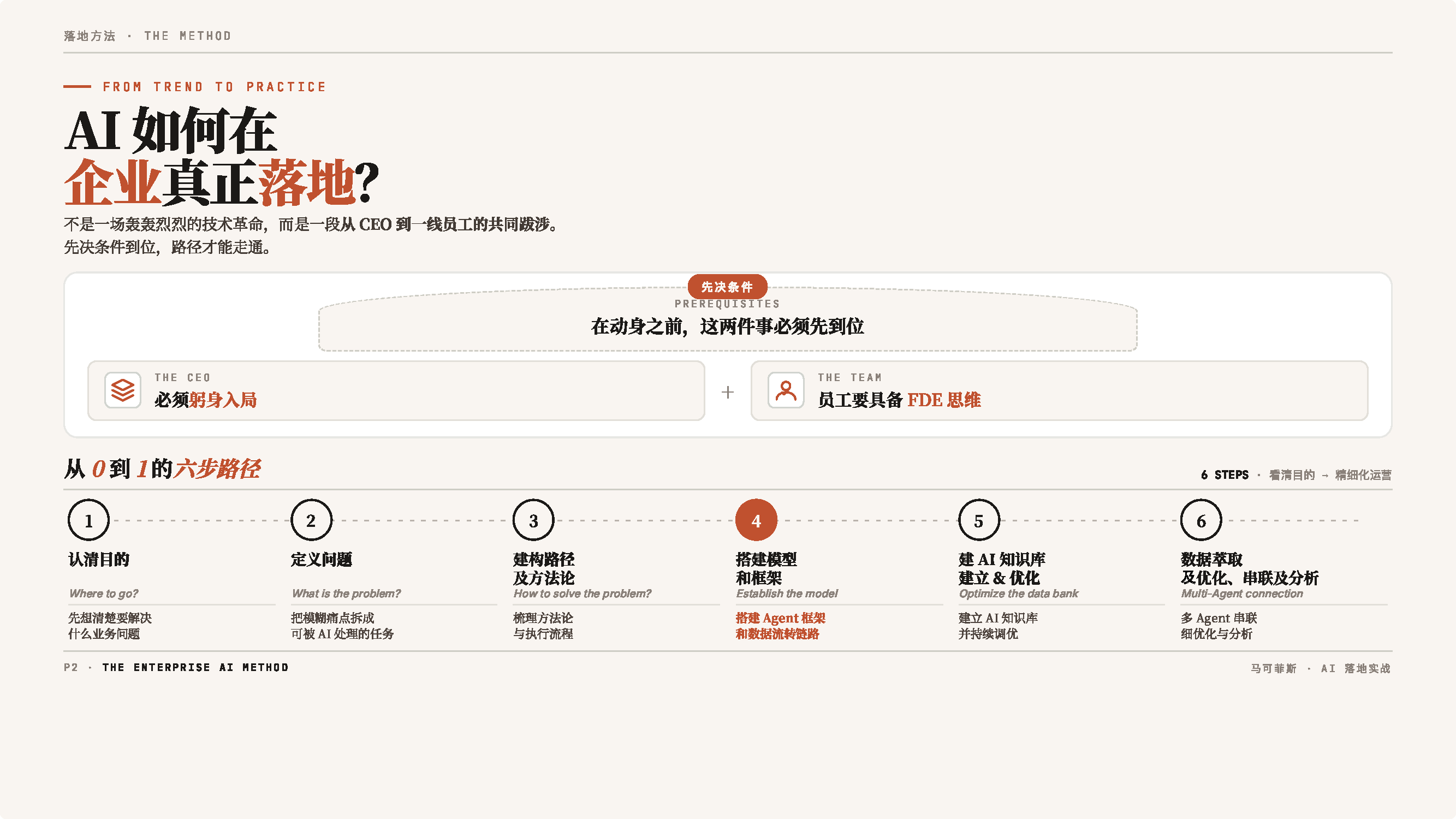
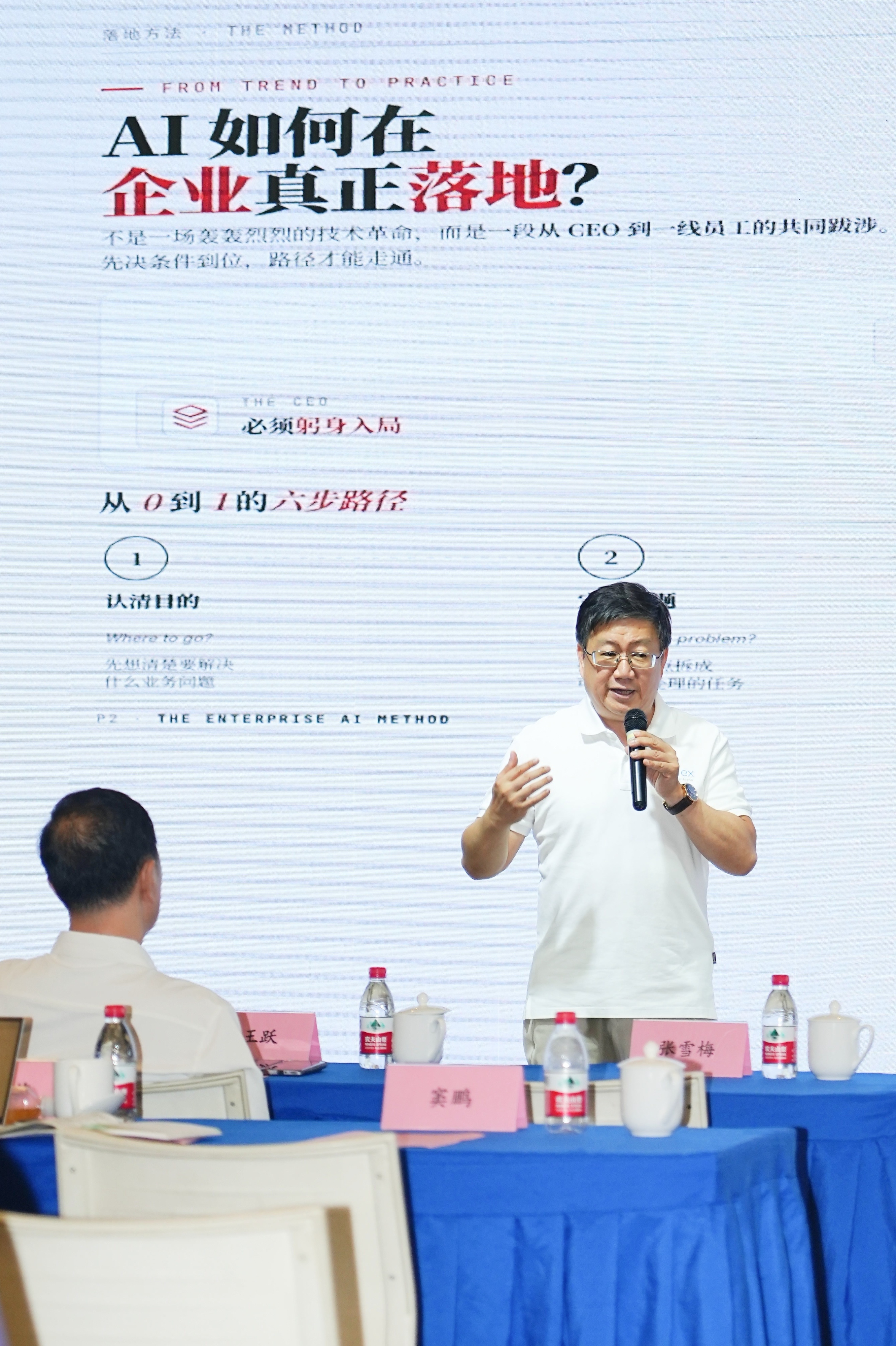
How does AI truly take hold inside an enterprise? Mr. Huang offered a clear answer — it is not a flashy technological revolution, but a shared journey from the CEO to front‑line employees.
"Hands‑on executive involvement is no empty slogan," Mr. Huang stressed. CEOs need to develop five concrete, trainable and assessable capabilities: understanding AI fundamentals, exploring AI applications, directing AI effectively, evaluating AI outputs, and using AI responsibly.
The so‑called FDE mindset — the mindset of a Forward Deployed Engineer — describes practitioners who effectively combine four roles: pre‑sales lead, product manager, project manager, and technical architect. The five core competencies of an FDE — value awareness, problem reframing, rapid prototyping, evaluation and guardrails, and organizational enablement — are none of them innate talents; each is built through deliberate practice. The first three determine whether you are "doing the right things"; the last two determine whether you are "getting things done."
Building on these prerequisites, Mr. Huang shared a six‑step pathway from zero to one: clarify purpose → define the problem → construct the path and methodology → build models and frameworks → establish an AI knowledge base → extract, refine, orchestrate and analyze data. This pathway is not six parallel steps, but a sequence of progressive depth — from "thinking clearly about what to solve" all the way to "multi‑agent orchestration, granular optimization, and analysis."
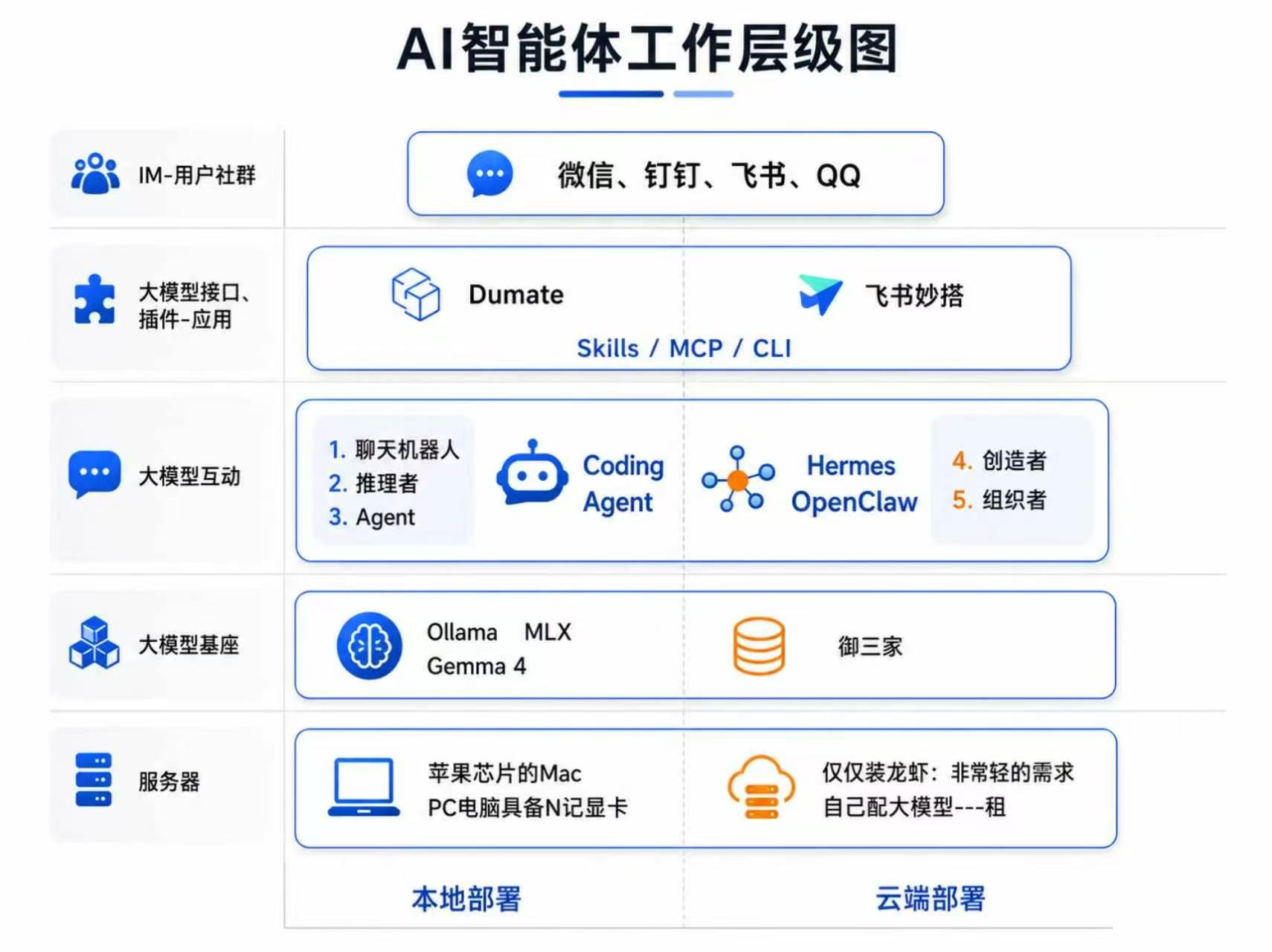
At the technical architecture level, he proposed the five‑level AI agent ladder: L1 Reach → L2 Access → L3 Interaction → L4 Foundation → L5 Server. Enterprises should first identify their current maturity level before choosing between on‑premises and cloud deployment. On‑premises deployment suits data‑sensitive scenarios requiring steady, low‑risk iteration; cloud deployment delivers faster iteration and greater scalability.
More importantly, Mr. Huang pointed to an ongoing paradigm shift in AI competition — from "whose model is stronger" to "whose agent thinks better." He summed this up as "first change the map, then find the new continent." Going forward, the true capability core of agents will be the Pattern Router: identifying what type of problem is at hand and selecting the right reasoning mode. The four reasoning modes — think‑then‑act, plan‑then‑execute, execute‑and‑reflect loop, and multi‑path parallel execution with pruning — each apply to distinct scenarios.
"Mindsets and reasoning paradigms are what truly decide success in enterprise‑grade AI rollout."

The ultimate question in AI adoption is not "how", but "why". Mr. Huang offered a distinctive interpretation of "cost reduction and efficiency improvement". AI's real "cost reduction" is not about cutting headcount, but eliminating six categories of invisible costs: communication costs, decision‑making costs, sunk costs, psychological‑contract costs, knowledge costs, and culture‑related costs. This perspective resonated strongly with the Taiwan‑invested enterprise representatives present.
Mr. Huang's presentation laid out the strategic framework; Henry's real‑world cases brought genuine enterprise‑level practical context to that framework.


Henry holds a Master's degree in Healthcare Industry Management. As Special Assistant to the General Manager at Maxflex, amid the company's rapid growth, he took on an internal FDE role to keep pace with the AI era and drive enterprise‑wide AI adoption.
"AI has, in essence, amplified my thinking, my experience, and my capabilities."
Drawing on real‑world internal cases at Maxflex, he demonstrated how AI can deliver working results across sales, marketing, human resources and other business scenarios. After three months of hands‑on practice, Hao Li distilled three core consensuses: a hiring mindset instead of a tool‑centric mindset (treat AI as a digital employee with defined roles, tasks, boundaries and performance reviews); the ceiling is determined by the foundation model; and the floor is secured by engineering capabilities.
He also emphasized that within an organization, point‑in‑time efficiency gains do not translate into organization‑wide efficiency gains. For AI to take root across the enterprise, organizations themselves must evolve into ground fertile for AI. Examples include embedding AI into business workflows, integrating AI into performance and incentive systems, and converting individual know‑how into transferable organizational capabilities.
Core conclusion: The real challenge lies in engineering capabilities and data asset accumulation — turning exploratory interest into sustainable organizational capabilities.
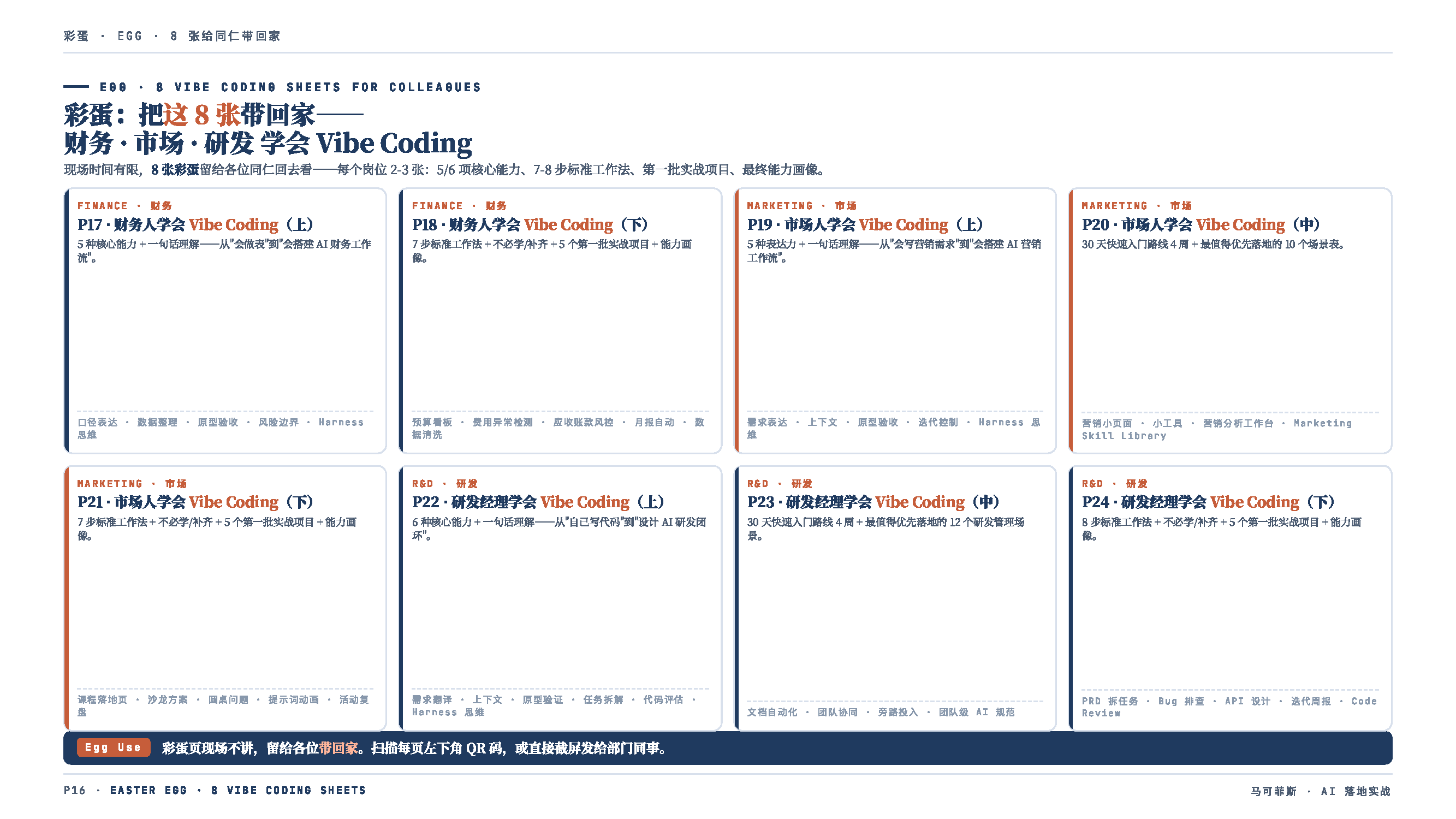
As a special takeaway for attending colleagues, Maxflex also prepared eight Vibe Coding role‑specific quick‑reference sheets, covering Finance, Marketing and R&D. Each sheet outlines core capabilities, standard operating methods, initial practical projects and competency profiles, serving as an actionable map for role transformation.
At this forum, Maxflex's presentation was praised by participating enterprises as "packed with substance and highly practical". Its AI implementation cases closely mirrored real‑world business pain points and addressed genuine workplace needs.
As an enterprise deeply rooted in medical device technology, Maxflex firmly believes that enterprise AI adoption is not a technology showcase, but a systematic upgrade of organizational capability. From hands‑on executive involvement to the FDE mindset among front‑line staff, from methodology building to validated real‑world deployment, Maxflex is proving through practice that enterprise AI transformation follows a clear path, employs replicable methods, and delivers measurable value.
Looking ahead, Maxflex will keep exploring AI‑empowered enterprise operations, and looks forward to sharing insights and pursuing joint development with more peers.
About Maxflex
Led by a team of passionate industry leading experts in material science, mechanical engineering, medical device and life science, Maxflex is an emerging, independent and fast-growing research, design and manufacturing enterprise dedicated to providing safe, efficient and innovative one-stop solutions for clear aligner therapy.
Ultimately, Maxflex improves the lives of more patients with better accessibility to state of art clear aligner therapy.
Business Inquiry
 ?
?
 SHANGHAI MAXFLEX MEDICAL TECHNOLOGY CO. LTD.
Business:1169 Yuanqu Rd, Anting Town, Jiading District, Shanghai, China 201805
Tel:+86-21-5956-0800
Fax:+86-21-5956-3088
E-mail:service@maxflexbrace.com
MAXFLEX INTERNATIONAL TRADING CO., LTD
8F.-1, No. 168, Yongji Rd., Xinyi Dist., Taipei City 110068 , Taiwan
SHANGHAI MAXFLEX MEDICAL TECHNOLOGY CO., LTD.
Factory:1169 Yuanqu Rd, Anting Town, Jiading District, Shanghai, China 201805
No.8, Dapumeiyuanqu 2nd Rd., Dalin Township, Chiayi Country, Taiwan, 622
